Last Fortress: Underground
- 3.8
- Rating
- 10.00M
- Installs
- Free
- Price

 Analysis by App-foxy
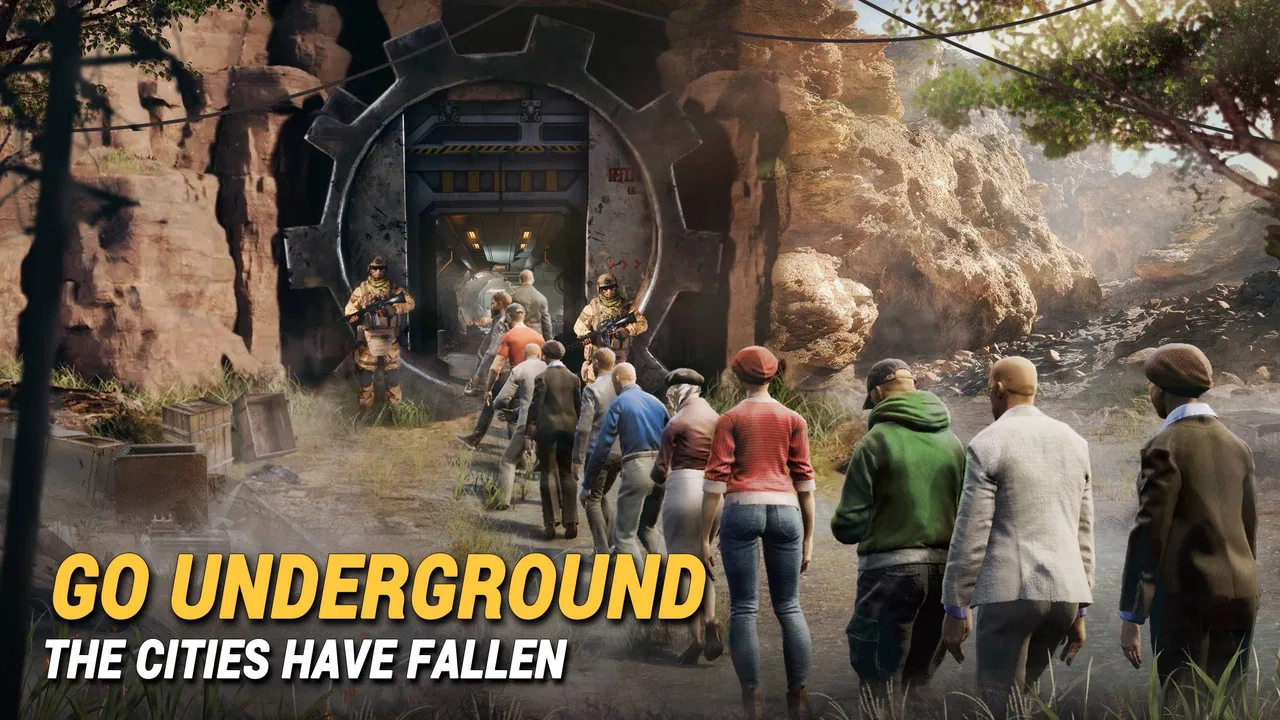
I approached Last Fortress: Underground expecting a familiar mobile strategy game with a zombie theme, but its strongest idea is more specific: your base is not spread across a visible field. It is built inside an underground shelter, and nearly every decision feels connected to making that enclosed space work. You are not simply placing buildings and waiting for an army to grow. You are balancing survival, construction, exploration, recruitment, and the steady pressure of a world that has already fallen apart.
That combination gives the game a more personal rhythm than many conventional kingdom builders. I found myself caring about the order in which rooms were improved because the fortress feels like a real place rather than a collection of menu icons. At the same time, it is still a long-term mobile strategy game, so progress depends on timers, repeated tasks, and careful resource management. If you want a quick action game that rewards short sessions with constant excitement, this is probably not the right choice. If you enjoy checking a developing base throughout the day and making decisions that pay off later, it has much more to offer.
How the underground fortress feels to manage
The opening hours are easy to understand, but they establish a surprisingly demanding routine. You begin by improving the shelter, assigning survivors to useful work, and making sure the basic flow of supplies does not stall. Each improvement creates another question: should I expand capacity, strengthen production, develop a character, or prepare for the next threat? That chain of choices is where the game becomes more interesting than its apocalypse setting alone suggests.
You May Also Like

 Pandora - Music & Podcasts
Pandora’s Music Is Easy to Start, but Harder to Recover
Pandora’s strength is its low-effort path from a seed to a station. Its weak spot is how much confidence it asks you to place in connection, setup, and quiet recovery.

 AccuWeather: Weather Radar
AccuWeather Review: A Quick, Clear Forecast for Everyday Decisions
For everyday plans, the best forecast is the one you can understand quickly. AccuWeather makes rain timing, radar, and local conditions easy to act on, with a few trade-offs.

 Hill Climb Racing
Why Hill Climb Racing Still Turns Crashes Into One More Run
A tiny car, a bumpy hill and one more upgrade: Hill Climb Racing keeps resurfacing because its simple chaos makes every near-miss feel personal.

 AliExpress - Shopping App
AliExpress Makes Global Shopping Feel Personal, but Shoppers Bear the Risk
AliExpress turns a global marketplace into a pocket-sized discovery engine. Its reach is useful, its shopping loop compelling, and its trade-offs easy to miss.

 Lords Mobile: Kingdom Wars
Lords Mobile Is a Kingdom-Building Routine, Not a Quick Match
A case-by-case verdict on the building, battles, device demands, and social commitments that make Lords Mobile rewarding for some players and exhausting for others.

 PDF Scanner app - TapScanner
TapScanner Makes Paperwork Easier to Capture, Check, and Share
TapScanner makes scanning with a phone feel less like a rescue operation and more like a dependable step in getting work done. Its capture tools are useful, though not flawless.
More From Our News Desk
View All News


I especially liked that the underground layout makes efficiency feel tangible. A room is not just an abstract upgrade level; it contributes to the sense that the shelter is becoming more capable. This makes construction decisions easier to remember, although it can also make mistakes feel more annoying. Spending resources on an upgrade that does not solve your immediate bottleneck may leave you waiting longer than expected for the next useful improvement.
The game comes from LIFE GAME PTE. LTD. and sits firmly in the strategy category. It is free to start, with optional purchases ranging from $0.99 to $99.99 per item. That pricing range matters because the core experience is accessible without an entry fee, but players who want to accelerate development may encounter a much more expensive path. I would treat purchases as convenience rather than as something necessary during the early stages, and I would decide on a personal spending limit before getting deeply invested in the upgrade cycle.
Speed is mostly about planning, not reflexes
In everyday use, the game feels fastest when I open it with a clear purpose. Collecting finished production, starting a construction project, assigning work, and checking available missions can be done in a short visit. The perceived speed drops when several activities are waiting behind timers or when I need to inspect multiple parts of the fortress before deciding what to do next. It is not slow in the same way as a poorly optimized action game; rather, its pace is deliberately stretched by the strategy structure.
A useful habit is to begin a longer construction or research task before putting the phone away, then return later when there is a meaningful decision to make. That approach makes the waiting feel less empty. Starting several small actions without considering their order can create an awkward gap where the shelter is busy but your next useful move is unclear.
For a realistic daily scenario, imagine opening the game during a commute or lunch break. I would first collect completed resources, review which survivor assignments are no longer useful, and launch the longest sensible upgrade. If I had more time, I would then examine exploration or combat preparation rather than spending everything immediately. This turns a short session into a planning checkpoint instead of a repetitive tapping routine.
The game also rewards separating urgent tasks from attractive ones. A flashy character improvement may be tempting, but expanding a weak production chain can help more over several sessions. That is one of the less obvious lessons here: the best move is often the one that improves tomorrow’s choices, not the one that produces the most visible change right now.
What happens when the shelter is under pressure
Heavy-use moments come from combining several systems at once. When I am moving between fortress development, survivor management, exploration, and combat preparation, the experience becomes mentally busy even if the individual actions are simple. The challenge is not only whether the game can display the next screen; it is whether I can keep track of what is consuming resources, what is waiting for completion, and which character or assignment should receive attention first.
This is where the underground setting helps and hurts. The compact shelter is easier to understand than a huge open map, but it also makes every inefficient choice feel close at hand. If production is poorly balanced, the shortage is constantly visible. If a room is upgraded at the wrong time, the delay affects the next several decisions. I found that the game feels smoother when I maintain a small priority list instead of trying to improve everything at once.
One practical tactic is to identify the resource that is currently limiting progress and build around it. Do not automatically spend every available material just because an upgrade is ready. Sometimes preserving supplies for a more important room or a required character development step prevents a longer stall. This is particularly useful for players who dislike the feeling of being forced to wait after making an impulsive purchase or upgrade.
The survivor side adds another layer of pressure. Characters are not merely visual additions to the roster; they represent choices about how the shelter operates and how you prepare for danger. I recommend thinking in terms of roles rather than chasing every new possibility. A well-organized group that supports your current bottleneck is more useful than a collection of individually appealing characters that do not fit your immediate plan.
Compared with a traditional tower-defense game, the action here is less immediate and more dependent on preparation. Compared with a standard city builder, the zombie-survival framing gives resource shortages a stronger emotional edge. And compared with a fast multiplayer strategy title, it is more comfortable for players who prefer gradual development over constant direct confrontation. The trade-off is that people looking for quick, skill-based matches may find the long-term structure too passive.
Reliability during ordinary play
My view of reliability here is tied less to dramatic action and more to whether the game supports a dependable check-in routine. The design is well suited to opening the app, reviewing completed work, making a few assignments, and leaving again. That structure makes it easier to fit into a busy day than a game that expects a long uninterrupted session every time.
However, dependable progress requires attention. If you ignore the shelter for too long, returning can mean sorting through multiple unfinished decisions rather than immediately enjoying a reward. The game does not remove the management burden for you, and that is both part of its appeal and one of its limitations. Players who enjoy organized maintenance will see this as depth. Players who want a game to remember everything automatically may experience it as clutter.
The large audience suggests that the concept has broad appeal: the game has passed ten million installs, with an average rating of 3.8 from around 431 thousand ratings. I would read that combination as a sign of a substantial player base with mixed reactions rather than as a guarantee that every device or play style will feel equally comfortable. A game built around timers, progression, and optional spending can be engaging for one person and frustrating for another, especially when expectations about speed differ.
There are also around 19 thousand written reviews, which indicates that many players have had enough experience to comment beyond a first impression. I would still judge the game by your own tolerance for recurring management. Ratings can tell you that opinions vary, but they cannot decide whether you personally enjoy checking production queues, adjusting assignments, and waiting for an upgrade to mature.
One reliability habit I found useful is to finish a session at a sensible stopping point. Before closing the game, I would make sure a meaningful task is running, important survivors are assigned, and resources are not being spent without a reason. This reduces the chance that the next visit becomes a confusing recovery session. It also makes the game feel more consistent because each opening has a clear purpose.
Device demands and practical limits
The listed minimum requirement is Android 6.0, so the game can reach a broad range of Android devices in principle. That does not mean every older phone will provide the same experience. A strategy game may appear less demanding than a high-speed action title, but menus, animated scenes, character displays, and repeated loading between systems can still make older hardware feel less comfortable during longer sessions.
I would be cautious if your phone already struggles with large games or becomes warm during ordinary use. The most demanding moments are likely to be the ones where you move repeatedly through different management areas or remain in the game for an extended planning session. Even without treating this as a benchmark, common sense points toward keeping enough storage available and closing unnecessary background apps when the game feels less responsive.
The current version is 26.0802.001. Keeping the app updated is sensible for any live mobile game because the experience can depend on the version installed, but I would not assume that an update automatically changes the game into something faster or simpler. The main performance question is whether your device can handle the combination of visual presentation and frequent transitions comfortably.
Resource demands are also about your time and attention, not only your phone. The game asks you to remember priorities, monitor development, and decide when to spend or save. If you have limited patience for timers, the most powerful device in the world will not solve the central friction. In that situation, a compact puzzle strategy game or a turn-based title may be a better fit because it offers clearer session boundaries and less ongoing maintenance.
Parents should also note the Teen content rating. That makes the game more appropriate for older players than for young children, especially when the subject matter, combat context, and optional purchases are considered together. I would use the platform’s purchase controls if the device is shared, because the free download does not mean every in-game transaction is free.
Recovery after mistakes, neglect, or a slow start
Recovery is one of the most important parts of judging a long-running strategy game. In this case, a poor early decision does not necessarily ruin the entire experience, but it can make the next stretch feel inefficient. If you have upgraded the wrong area or spent supplies too quickly, the best response is usually to stop trying to fix everything simultaneously. Pick one bottleneck, stabilize it, and let the shelter rebuild its rhythm.
Returning after a break can be more intimidating than starting fresh because there may be several systems to review. I recommend treating the first session back as an audit. Check what is producing, what is blocked, which survivors are idle, and which upgrade would create the most useful improvement. Resist the urge to spend every stored resource immediately; a reserve gives you flexibility while you remember how your fortress was organized.
This recovery approach is a genuine strength for patient players because the game’s value comes from gradual correction rather than perfect execution. It is less appealing if you want every decision to have an instant, obvious payoff. The shelter can become a project you steadily repair, but that project requires accepting that some progress will be slower than you would like.
Purchases can complicate the feeling of recovery. Since optional items can cost as much as $99.99 individually, spending to remove frustration may be tempting after a mistake or a long delay. I would not use purchases as a substitute for understanding the resource flow. If the underlying problem is poor prioritization, acceleration may only move the same problem to the next stage.
Who will enjoy this particular strategy game
I would recommend it to players who like the idea of maintaining a living base over many short visits. It suits people who enjoy deciding which improvement matters most, organizing a group of survivors, and watching an enclosed shelter gradually become more capable. The zombie setting adds urgency, but the real attraction is the management loop.
It is also a good option for someone who wants more structure than a simple idle game. You can check in briefly, but there are enough connected decisions to reward closer attention. The best experience comes from alternating between quick maintenance and longer planning sessions, rather than expecting every visit to deliver a major event.
I would suggest skipping it if you dislike timers, resource shortages, character progression, or in-app purchase pressure. It is also a weak match for anyone seeking a self-contained campaign that can be completed in a few evenings. The game is designed around continued development, so its satisfaction depends on whether you enjoy returning to the same fortress and improving it piece by piece.
Players who prefer direct combat should consider a dedicated action or tower-defense alternative instead. Those games usually provide more immediate feedback and clearer control over each encounter. On the other hand, players who find ordinary base builders too detached may appreciate how the underground shelter gives the economy a survival context. Every upgrade feels connected to keeping a community functioning, even when the actual mechanics remain familiar.
My final performance and value judgment
After spending time with it, I see Last Fortress: Underground as a deliberate, management-heavy strategy game rather than a fast zombie adventure. Its perceived speed is good for short, purposeful check-ins, but less satisfying when you want constant activity. Its heavier moments come from juggling several systems and transitions, while its main device limitation is likely to be more noticeable on older hardware or during extended sessions than during a quick resource collection visit.
The game’s biggest strength is the way its setting gives ordinary strategy decisions a clear identity. Building below ground, organizing survivors, and recovering from shortages feel more connected than they often do in generic kingdom builders. My main reservation is the long-term friction: timers, repeated maintenance, and optional purchases can gradually test your patience if you prefer a faster or more transparent progression model.
As a free game from LIFE GAME PTE. LTD., it is easy to try without committing money at the start. I would approach it with realistic expectations: the free entry opens the door, but the full rhythm is built around patience and repeated decisions. Set a spending boundary, focus on one bottleneck at a time, and do not confuse a busy screen with productive progress.
My recommendation is conditional but positive: choose it if you want an underground survival base that rewards planning across many sessions, and skip it if you want immediate action or a short, finished experience. On a compatible device, the game can become a satisfying daily strategy habit, provided you are comfortable with its slower pace and willing to manage the fortress instead of rushing through it.
FAQs for Last Fortress: Underground
01What is Last Fortress: Underground about?
Last Fortress: Underground is a post-apocalyptic strategy and survival game in which you manage a fortified underground shelter after civilization has collapsed. You recruit survivors, assign them to useful jobs, upgrade rooms, research technologies, gather resources, and defend your base. The game combines shelter management, hero collection, exploration, alliances, and real-time competition with other players.
02Is Last Fortress: Underground free to download and play?
Yes, Last Fortress: Underground can generally be downloaded for free on supported Android and iOS devices. However, it uses optional in-app purchases for resources, speed-ups, character items, and other progression advantages. You can make steady progress without spending money, but players who avoid purchases may need more patience, especially during longer upgrades, events, and competitive multiplayer activities.
03Does the game require an internet connection?
Yes, Last Fortress: Underground is primarily an online game and normally requires a stable internet connection. Your progress, events, alliances, battles, purchases, and server-based activities depend on communication with the game’s servers. It is therefore not a suitable choice for fully offline play. A reliable Wi-Fi or mobile data connection is recommended to avoid disconnections during important activities.
04Is Last Fortress: Underground suitable for beginners?
The game is accessible to beginners, but it can feel complex because it introduces many systems, including room upgrades, survivor assignments, hero development, research, equipment, exploration, alliances, and timed events. The early tutorial helps explain the basics, although understanding the best upgrade priorities takes time. New players should follow beginner missions, conserve premium resources, and join an active alliance for guidance and rewards.
05Can I play Last Fortress: Underground with other players?
Yes, multiplayer interaction is a major part of Last Fortress: Underground. You can join or create an alliance, communicate with other members, participate in cooperative activities, help complete alliance objectives, and compete against rival groups on the world map. Although shelter development can be enjoyed individually, joining an active alliance usually provides valuable bonuses, support, event participation, and a more complete experience.
Pros
- Strategic base-building offers plenty of meaningful decisions.
- Regular events provide new objectives and seasonal rewards.
- Distinct hero abilities encourage varied team compositions.
- Alliance features make cooperation and shared goals worthwhile.
- Post-apocalyptic visuals and sound create a fitting atmosphere.
Cons
- Progress becomes increasingly dependent on timers and resource management.
- Competitive rankings can favor players who spend heavily.
- Many systems and menus may overwhelm new players at first.
- Hero upgrades require significant time to develop a strong roster.
- Frequent notifications can feel intrusive during regular play.

Last Fortress: Underground
Gallery